Beyond the Leaderboard: The Systemic Risks of High-Stakes Corporate Cultures [ Part 1 0f 2]. ❤️🩹
Part I: The Prevailing Orthodoxy: Aligning Employee Well-being with Corporate Performance
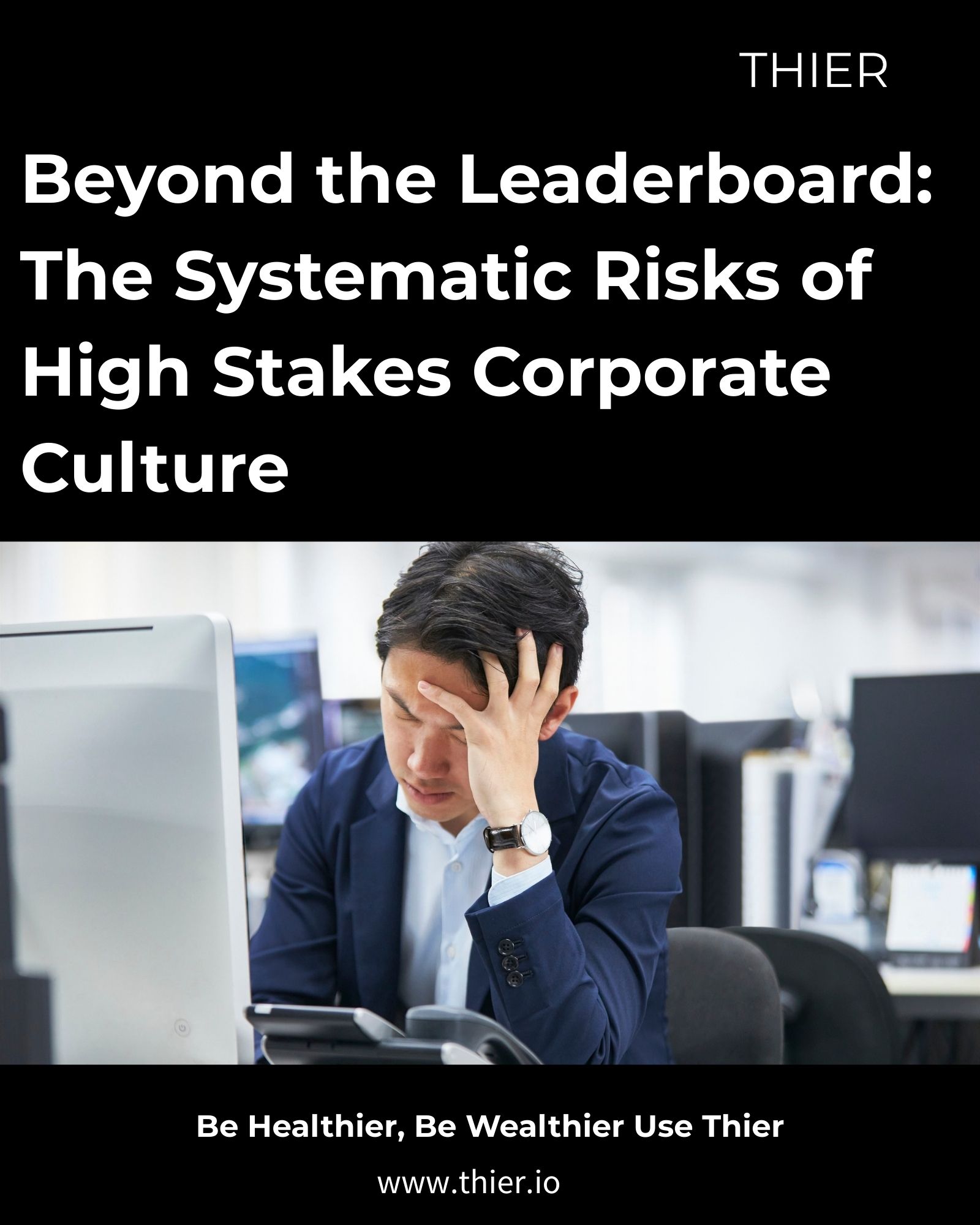
In contemporary strategic management, the alignment of employee well-being with corporate performance isa foundational principle. The prevailing orthodoxy posits a symbiotic relationship where investments in a healthy, engaged workforce yield direct and measurable returns in productivity, innovation, and profitability.
This perspective is not merely aspirational; it is substantiated by a significant body of evidence demonstrating that a strong corporate culture is a powerful driver of financial success. The data indicates that companies cultivating a robust corporate culture experience a four fold increase in revenue growth compared to those with weaker cultures. This establishes a clear, quantifiable link between the intangible asset of culture and the tangible outcome of revenue, making it a primary concern for senior leadership.
The keystone of this positive culture is effective leadership. Managerial influence is so profound that a Gallup study attributed 70% of the variance in team engagement directly to the manager. Recognising this, a majority of executives 90% agree that the importance of company culture is increasing in today's competitive market.
With 52% identifying leadership development as the single most impactful lever for cultural improvement. This top-down influence sets the organisational tone, establishing the norms, values, and behaviours that dictate the employee experience.
In response to this understanding, organisations have increasingly adopted formal wellness programs as a strategic tool. Currently, these initiatives are widespread, with 85% of large corporations and 54% of smaller workplaces offering some form of wellness program.
The return on these investments is evident in key performance indicators. Employees participating in such programs have been found to take 56% fewer sick days, directly impacting operational continuity and reducing costs associated with absenteeism.
Furthermore, a focus on employee well-being, particularly through recognition-led programs, has a dramatic effect on burnout, with employees being up to 90% less likely to report feeling burned out"always" or "very often".
These corporate initiatives are increasingly aligned with evolving employee expectations. The modern workforce views mental health support not as a perk, but as a core component of the employer-employee contract.
A significant 71% of workers believe their employers are more concerned with employee mental health than in the past, and over 80% state that an employer's approach to mental health will be a critical consideration in their future job searches. This shift transforms wellness from a purely internal efficiency metric into a crucial factor for talent acquisition and retention in a competitive labour market.
However, the very success and widespread acceptance of this wellness-performance alignment can create a critical organisational blind spot. The positive data, which validates investments in general wellness, often generates a powerful and self-reinforcing narrative that the organisation's culture is fundamentally supportive of employee health.
While this may be true for the majority of the workforce, this overarching narrative can obscure the existence of distinct subcultures, particularly within high-pressure, revenue-generating functions, where the relationship between performance and health is not only unaligned but potentially inverse.
The success of broad-based wellness programs may inadvertently mask or even subsidise the deeply unhealthy, yet commercially productive, behaviours required for success in these specific, high-stakes roles.
The prevailing orthodoxy ,therefore, is not incorrect, but it is dangerously incomplete. It fails to account for the paradox wherein the company's greatest financial gains may be directly correlated with the most severe health detriments for its most critical client-facing employees.
The High-Pressure Crucible: Documenting the Health Crisis in Client-Facing Roles
Pivoting from the general organisational landscape to the specific environment of client-facing professionals reveals a starkly different reality. Within these high-pressure roles, particularly sales and business development, the positive correlation between corporate success and employee well-being begins to fracture and, in many cases, invert. This is not a matter of anecdotal evidence but a statistically verifiable crisis characterised by disproportionately high rates of mental health struggles and systemic burnout.
The most alarming data point is the significant disparity in mental health outcomes. An estimated 43% of salespeople struggle with mental health issues, a rate more than double the 20% observed in the general population. This statistic underscores that the challenges faced in these roles are not merely stressful but are contributing to clinical levels of distress. A poll of the sales community further illuminates the depth of the problem, revealing that nearly half (47%) of respondents describe their mental state as "poor" or "very poor". This suggests a pervasive state of psychological strain that extends far beyond the typical pressures of a demanding profession.
Burnout, defined as a state of physical, emotional, andmental exhaustion resulting from prolonged stress, is endemic to theseroles. The scale of the issue is staggering: a Gartner survey found that nearly 90% of sales employees experience burnout at some point in theircareers. Another survey supports this, indicating that 67% ofsalespeople report feeling close to experiencing burnout at any giventime. These figures portray an environment where exhaustion is not anexception but the norm.
This health crisis is the direct result of a unique and relentless combination of stressors inherent to the sales profession:
- Intense Performance Pressure: The constant demand to meet or exceed high and often escalating, quotas creates a perpetual state of anxiety. This pressure is a primary driver of burnout and diminished confidence.
- Frequent and Inevitable Rejection: Sales professionals face rejection on a daily basis, from unsuccessful cold calls to deals that collapse at the final stage. This steady stream of negative feedback systematically erodes self-doubt and damages emotional resilience over time.
- Pervasive Lack of Control: Many factors critical to closing a sale such a market conditions, client budgets, or product limitations—lie entirely outside the salesperson's control. This feeling of powerlessness over one's own success is a significant source of frustration and stress.
- Systemic Work-Life Imbalance: The role often demands long hours, including early mornings, late evenings, and weekends. Compounding this, modern technology creates a "digital leash," blurring the lines between work and personal life and preventing genuine rest and recovery.
The connection between this poor mental state and job performance is explicit and seemingly straight forward.Data shows that 77% of salespeople who report good mental health also rate their own performance as "very good" or "excellent."
Conversely, only 29% of those experiencing poor mental health report high performance. This initially appears to support the conventional wisdom: healthier employees perform better. However, this is where the central paradox of the high-pressure sales culture emerges.
The very culture that drives sales success is built upon the stressors that degrade mental health. The traits most celebrated in top-performing salespeople extreme resilience, persistence in the face of rejection, and a high tolerance for stress are also significant risk factors. The organisational culture selects for and rewards individuals who can endure these punishing conditions. However, this psychological fortitude is a finite resource.
The continuous exposure to the very stressors the job demands leads to a gradual depletion of this resilience,culminating in the widespread burnout and mental health crises documented. The strength that the culture values becomes a profound vulnerability. It allows individuals to tolerate a damaging environment for an extended period, often leading to a more severe and debilitating collapse when their capacity for endurance is finally exhausted. The system, therefore, does not just create stress; it actively selects for individuals most likely to absorb that stress until they break.
Sources
arbinger.com
The ultimatelist of corporate culture statistics - Arbinger Institute
Opens in a newwindow
strategicmarketresearch.com
CorporateWellness Statistics and Trends 2024 - Strategic Market Research
Opens in a newwindow
workhuman.com
20 ImpactfulWorkplace Wellness Statistics in 2025 - Workhuman
Opens in a newwindow
apa.org
Workerwell-being is in demand as organizational culture shifts
Opens in a newwindow
salesdrive.info
Why MentalHealth Programs Matter for Sales Team Performance - SalesDrive, LLC
Opens in a newwindow
revnew.com
The UltimateGuide to Mental Health for Sales Pros - Revnew
Opens in a newwindow
peaksalesrecruiting.com
Understanding Sales Burnout: Causes, Signs, and Solutions - Peak Sales Recruiting
Opens in a newwindow
peaksalesrecruiting.com
www.peaksalesrecruiting.com
Opens in a newwindow
intelemark.com
Sales TeamHealth and Wellbeing: Boost Mental Resilience - Intelemark
Opens in a newwindow
moiremarketing.com
BusinessDevelopment Burnout: The Last Straw - Moiré Marketing Partners
Opens in a newwindow
business.purdue.edu
New Study ShowsWorker Health Declines as Sales Surge - Purdue ...
Opens in a newwindow
highspeedtraining.co.uk
Peer Pressure inthe Workplace | Positive & Negative Effects - High Speed Training
Opens in a newwindow
spinify.com
Confronting theToxic Sales Culture: Strategies for a Healthier Team ...
Opens in a newwindow
betterup.com
Effects of PeerPressure: How It Affects the Workplace - BetterUp
Opens in a newwindow
braintrustgrowth.com
The 5 Bad Habits Every Sales LeaderMust Break – Immediately - Braintrust Growth
Opens in a new window
salesxceleration.com
Sometimes Peer Pressure is Just Whatthe Doctor Ordered | Sales Xceleration Blog
Opens in a new window
kiihealth.com
How to identifyif your workplace has an unhealthy drinking culture - Kii Health
Opens in a newwindow
mindbeacon.com
How to Identifyif Your Workplace Has an Unhealthy Drinking Culture - MindBeacon
Opens in a newwindow
iod.com
High stakesbusiness or work culture and stress-related drinking | Blogs | IoD
Opens in a newwindow
ias.org.uk
Alcohol in theworkplace - Institute of Alcohol Studies
Opens in a newwindow
gettips.com
BalancingAlcohol Consumption and Health: Tips for Industry Workers
Opens in a newwindow
cdc.gov
Alcohol Use andYour Health - CDC
Opens in a newwindow
nutritionsource.hsph.harvard.edu
Alcohol:Balancing Risks and Benefits - The Nutrition Source
Opens in a newwindow
abstraktmg.com
How to PreventSDR Burnout and Reduce Turnover - Abstrakt Marketing Gr