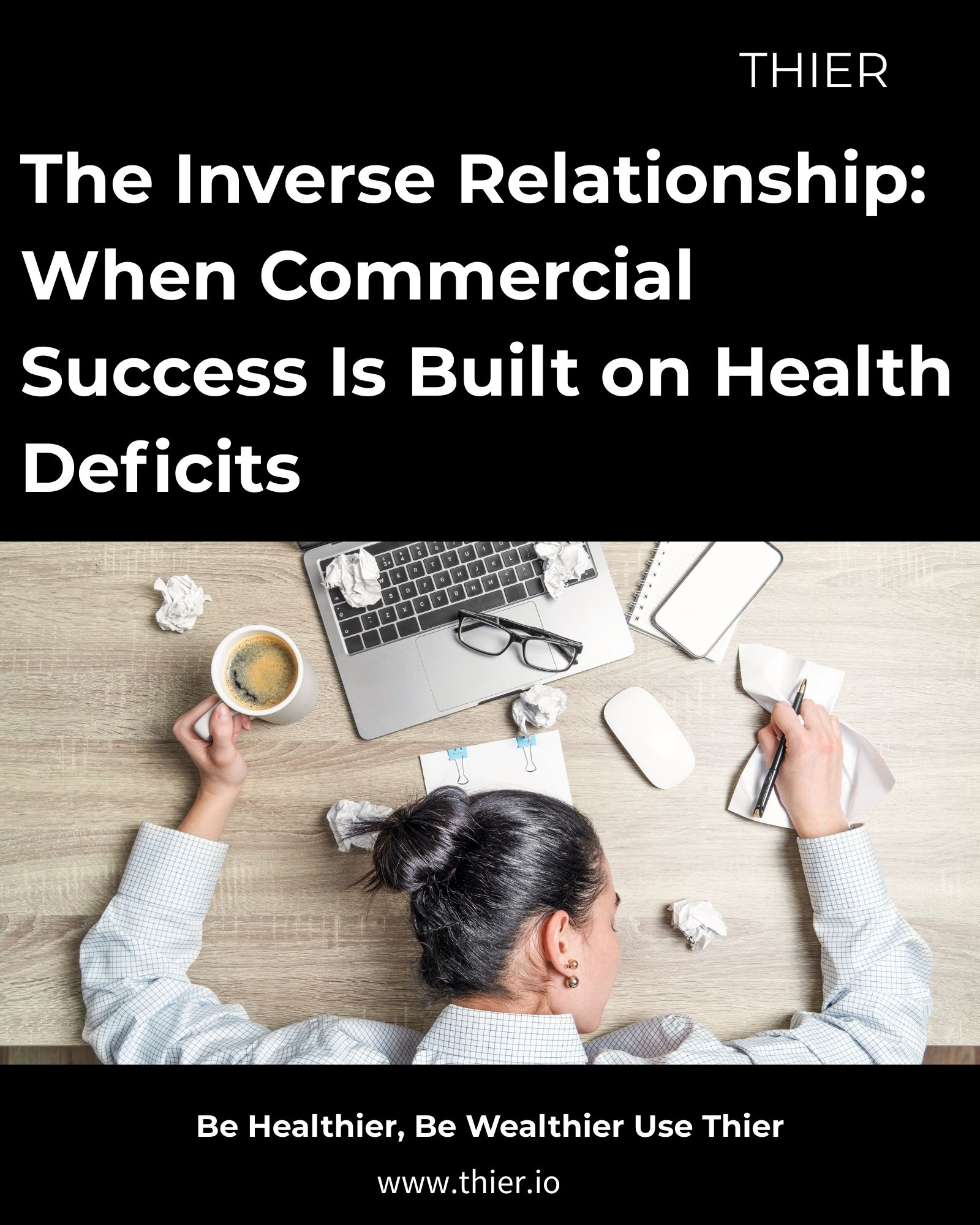
The Inverse Relationship: When Commercial Success Is Built on Health Deficits. [ Part 2 of 2] ❤️🩹
While the correlation between the high-pressure sales environment and poor health outcomes is clear, a landmark study provides powerful evidence of a direct, causal, and inverse relationship between a company's commercial success and the physical health of its employees
The study, "No Pain,No Gain: Work Demand, Work Effort, and Worker Health," conducted by economists at Purdue University and the University of Copenhagen, examined the real-world health consequences for employees at firms experiencing rapid surges in sales. The findings are unequivocal and alarming. As companies' sales increase rapidly, their workers log longer hours and earn more money. However, these financial gains come at a steep, quantifiable health cost.
The research reveals that these periods of heightened commercial activity lead to a statistically significant increase in the likelihood of workers purchasing anti-depressants and medications for heart disease. The health impacts extend beyond pharmacological intervention to acute medical events. During and after these sales surges, employees are more likely to be hospitalised with diagnoses directly related to stress and burnout. Most critically, the data shows higher rates of hospitalisation for life-threatening conditions, including heart attack, stroke, and severe liver disease a condition often considered a clinical indicator of alcoholism.
The Purdue Study: Quantifying the Health Costs of Surging Sales
The mechanism identified by the study is the management of workload. The adverse health consequences are specifically linked to "rapid surges" in sales, which lead companies to demand more work effort from their existing employees in "short sprints" rather than smoothing the workload or investing in additional staff. This represents a conscious or unconscious strategic choice by the organisation: to extract maximum short-term effort from its current human capital rather than investing in sustainable capacity.
Perhaps the most troubling finding is the persistence of these negative health effects. The use of anti-depressants and heart-disease medications remains elevated for years, even after the period of heightened sales has subsided. This reveals a critical misalignment in the time horizons of the organisation and the individual employee. The company reaps immediate, measurable financial rewards from a sales surge, which are reflected positively in quarterly and annual reports.The employee also receives an immediate financial benefit in the form of higher earnings, but the study quantifies that the corresponding loss in well-being negates nearly one-quarter of these monetary gains.
The most severe costs to the employee—chronic illness, long-term dependence on medication, and hospitalisation—are delayed, manifesting over months and years. By the time these costs fully materialise for the individual, the organisation has already booked the profit from the sales surge and moved on to the next fiscal period.
The cause (the intense work effort) and the effect (the chronic disease) are fundamentally disconnected in the corporate accounting of success. This temporal lag allows the organisation to effectively externalise the long-term health costs of its peak performance onto the individual employee, their family, and the broader public health system. The "gain" for the company is immediate and recorded on the income statement, while the"pain" for the employee is deferred and enduring, creating a fundamentally unsustainable and ethically fraught business model.
Mechanisms of Cultural Transmission: How Peer Influence Shapes Behaviour
The severe health outcomes documented are not random occurrences but are systematically produced and sustained by powerful cultural mechanisms. The transmission of norms and behaviours within an organisation, particularly in high-pressure subcultures, is driven primarily by peer influence. This influence can manifest as both a force for positive accountability and a driver of deeply unhealthy behaviours. Understanding these mechanisms; unhealthy competition and the normalisation of high-risk coping strategies. Is critical to explaining how the inverse relationship between commercial success and employee health is established and perpetuated.
The Dynamics of Unhealthy Competition and Peer Pressure
In the workplace, peer pressure is the influence exerted by colleagues and managers that compels an individual to conform to group attitudes and behaviours. This pressure can be direct, through explicit requests or demands, or indirect, where an individual feels an unspoken obligation to align with perceived group norms, such as working late because everyone else does.
In many sales environments, this dynamic curdles into a toxic culture defined by hyper-competitiveness. When rewards and recognition are focused solely on individual rankings and hitting quotas, the environment can devolve into a zero-sum game.
This fosters destructive behaviours such as with holding valuable leads or information from colleagues, engaging in backchannel gossip to undermine rivals, or even actively sabotaging a teammate's work to gain a competitive edge.The cultural focus on celebrating individual. "winners"while ignoring consistent, collaborative contributors erodes the psychological safety necessary for teamwork, creating an atmosphere of mistrust and anxiety.
The psychological impact on employees is profound. The constant need to prove one's worth to peers, coupled with the fear of being outperformed, leads to heightened anxiety, diminished self-confidence, and ultimately, poorer performance as focus shifts from client needs to internal competition. This environment is a powerful driver of attrition; evidence suggests that a toxic culture is ten times more likely to cause employee turnover than dissatisfaction with compensation.
Leadership plays a pivotal role in this cycle. Under immense pressure to deliver revenue targets, sales leaders often unwittingly reinforce these negative behaviours. By focusing exclusively on lagging indicators (the final sales numbers) and demanding "more calls and more closes," they amplify the stress and fear of failure within the team. This pressure-cooker environment encourages shortcuts and transactional behaviours rather than the development of sustainable, value-based selling skills, perpetuating a cycle of underperformance and escalating pressure. While peer groups can be a constructive force for brainstorming and sharing best practices in a healthy culture , in a toxic one, they become the primary enforcement mechanism for destructive norms.
The Normalisation of High-Risk Behaviours: A Case Study on Workplace Drinking Culture
The intense stress and anxiety generated by a hyper-competitive work environment directly fuels the adoption of unhealthy coping mechanisms. Among the most pervasive and damaging of these is the normalisation of excessive alcohol consumption, a phenomenon central to the"wine and dine" culture of many client-facing professions.
This culture often presents alcohol consumption as an integral part of the job essential for client entertainment, team bonding, and celebrating success. Company events frequently centre around alcohol, creating a powerful indirect peer pressure for employees to partake in order to"fit in" or be seen as part of the team. This can alienate employees who do not drink for personal, health, or religious reasons and normalises drinking as a default social and professional activity.
Beyond social functions, alcohol is widely adopted as a tool for stress management. The "wine-to-unwind" culture serves as a coping mechanism for the pressures of the job, a way to decompress after a stressful day. This link is supported by data showing that individuals who work long hours defined as more than 48 hours per week—are 12% more likely to become heavy drinkers.
The consequences of this normalised behaviour are significant, impacting both productivity and long-term health. A survey by the Institute of Alcohol Studies (IAS) found that 42% of workers have gone to work either hungover or still under the influence of alcohol, with 9% admitting to doing so within the last six months. On such days, these employees self-reported their performance as being 39% less effective than usual. The safety implications are even more severe, with the International Labour Organisation (ILO) estimating that up to 40% of all accidents in the workplace are related to alcohol use.
These two cultural mechanisms—unhealthy competition and normalised high-risk behaviour—are not independent but are dangerously synergistic. The intense psychological distress created by the low-trust, high-pressure competitive environment serves as the engine for harmful coping behaviours. The corporate culture, in effect, simultaneously creates the psychological wound through relentless pressure and then offers a"solution" in the form of socially sanctioned, and often company-funded, alcohol consumption.
This creates a vicious cycle: the pressure to perform drives behaviours that degrade health, which in turn can lead to the severe clinical outcomes, such as the "severe liver disease"hospitalisations identified in the Purdue study. The "wine and dine" culture is not merely a social quirk; it is a systemic response to the psychological damage inflicted by the performance culture itself.
Part V: Conclusion: Towards a Sustainable High-Performance Culture
The analysis reveals a critical paradox at the heart of modern corporate performance. While the alignment of employee well-being and company success holds true in many organsational contexts, a dangerous inverse relationship can emerge and become entrenched within high-pressure, client-facing subcultures. This phenomenon, where peak commercial outcomes are achieved at the cost of employees' physical and mental health, is not an inevitable price of success. Rather, it is the result of specific and addressable cultural choices regarding how performance is defined, managed, and rewarded.The path forward lies not in abandoning ambitious goals, but in fundamentally re-architecting the cultural framework to build a model of sustainable high performance.
A truly strategic approach to human capital must view employee health not as a discretionary benefit or a cost centre, but as a critical asset essential for long-term, sustainable returns. The "churn and burn" model, which treats employees as expendable resources, is financially and operationally untenable. It leads to staggering costs associated with high turnover—estimated at 15-20% of payroll budgets—and results in the continuous loss of institutional knowledge, damaged client relationships, and potential reputational harm.
The short-term revenue gains achieved through high-pressure tactics are systematically eroded by the long-term costs of talent depletion. Therefore, investing in a culture thatsupports health in all roles is not a concession to "soft" values; itis a core tenet of long-term financial sustainability and competitiveadvantage.
Based on the evidence, the following strategicrecommendations are proposed for leadership seeking to resolve the performance paradox and foster a culture of human sustainability:
- Redefine and Broaden Performance Metrics: Organisations must evolve beyond a singular focus on lagging indicators like revenue and quotas. Leaders should be trained to measure and reward the behaviours that lead to sustainable success—such as collaboration, knowledge sharing, and ethical client management. The evaluation of an employee's performance should include not just what was achieved, but how it was achieved, thereby discouraging the toxic, zero-sum competition that fuels burnout.
- Cultivate Psychological Safety: Trust is the bedrock of a healthy, high-performing team. Leaders must actively build a culture where employees feel safe to take risks, voice concerns, and admit vulnerability without fear of penalty or being labeled as weak. Research shows that when leaders openly share their own challenges and development areas, it normalises vulnerability and significantly enhances psychological safety within their teams.
- Invest in Accountable, Empathetic Leadership: Since managers are the primary conduits of culture , their training is paramount. They must be equipped to recognise the early warning signs of burnout—such as chronic fatigue, increased irritability, or social withdrawal —and to intervene with empathy. Leadership accountability must be expanded to include metrics related to their team's well-being, engagement, and retention, balancing the intense focus on sales targets.
- Promote Healthy Boundaries and Coping Mechanisms: The organisation must actively counter the "always on" culture by systematically promoting work-life balance. This includes enforcing break times, encouraging the full use of paid time off, and establishing clear policies that respect employees' personal time. Concurrently, companies should prominently offer and destigmatize the use of healthy stress-management resources, such as mindfulness programs, fitness initiatives, and confidential mental health support, providing viable alternatives to the "wine-to-unwind" norm.
- Systematically De-emphaside Alcohol in Corporate Culture: A tangible and high-impact step is to decouple professional success and social belonging from alcohol consumption. Corporate events should be designed to be inclusive, offering appealing non-alcoholic options and activities that do not center on drinking. Furthermore, organisations can shift their reward systems away from alcohol-based incentives (e.g., celebratory champagne, cases of wine) towards wellness-focused perks, such as gym memberships, spa days, or additional time off, sending a clear signal that the company values its employees' health.
By implementing these strategies, organidations can begin to dismantle the destructive cycles of pressure and burnout, moving towards an environment where ambition and well-being are not opposing forces but mutually reinforcing elements of a durable and truly successful enterprise.
Join the Renaissance in Employee Health!
If you're interested in becoming part of the THIER journey, as an individual or a company. Select the link relevant to you!
Join our Waitlist: If you are a Head of Wellness select this link
Join our Waitlist: [Gen Z, Gen X, Gen Y or Baby Boomers] select this link
Get In Touch Health Insurers Here:
Investors Get in Touch Here:
For Partnerships Get in Touch Here
Source
arbinger.com
The ultimatelist of corporate culture statistics - Arbinger Institute
Opens in a newwindow
strategicmarketresearch.com
CorporateWellness Statistics and Trends 2024 - Strategic Market Research
Opens in a newwindow
workhuman.com
20 ImpactfulWorkplace Wellness Statistics in 2025 - Workhuman
Opens in a newwindow
apa.org
Workerwell-being is in demand as organizational culture shifts
Opens in a newwindow
salesdrive.info
Why MentalHealth Programs Matter for Sales Team Performance - SalesDrive, LLC
Opens in a newwindow
revnew.com
The UltimateGuide to Mental Health for Sales Pros - Revnew
Opens in a newwindow
peaksalesrecruiting.com
UnderstandingSales Burnout: Causes, Signs, and Solutions - Peak Sales Recruiting
Opens in a newwindow
peaksalesrecruiting.com
www.peaksalesrecruiting.com
Opens in a newwindow
intelemark.com
Sales TeamHealth and Wellbeing: Boost Mental Resilience - Intelemark
Opens in a newwindow
moiremarketing.com
BusinessDevelopment Burnout: The Last Straw - Moiré Marketing Partners
Opens in a newwindow
business.purdue.edu
New Study ShowsWorker Health Declines as Sales Surge - Purdue ...
Opens in a newwindow
highspeedtraining.co.uk
Peer Pressure inthe Workplace | Positive & Negative Effects - High Speed Training
Opens in a newwindow
spinify.com
Confronting theToxic Sales Culture: Strategies for a Healthier Team ...
Opens in a newwindow
betterup.com
Effects of PeerPressure: How It Affects the Workplace - BetterUp
Opens in a newwindow
braintrustgrowth.com
The 5 Bad Habits Every Sales LeaderMust Break – Immediately - Braintrust Growth
Opens in a new window
salesxceleration.com
Sometimes Peer Pressure is Just Whatthe Doctor Ordered | Sales Xceleration Blog
Opens in a new window
kiihealth.com
How to identifyif your workplace has an unhealthy drinking culture - Kii Health
Opens in a newwindow
mindbeacon.com
How to Identifyif Your Workplace Has an Unhealthy Drinking Culture - MindBeacon
Opens in a newwindow
iod.com
High stakesbusiness or work culture and stress-related drinking | Blogs | IoD
Opens in a newwindow
ias.org.uk
Alcohol in theworkplace - Institute of Alcohol Studies
Opens in a newwindow
gettips.com
BalancingAlcohol Consumption and Health: Tips for Industry Workers
Opens in a newwindow
cdc.gov
Alcohol Use andYour Health - CDC
Opens in a newwindow
nutritionsource.hsph.harvard.edu
Alcohol:Balancing Risks and Benefits - The Nutrition Source
Opens in a newwindow
abstraktmg.com
How to PreventSDR Burnout and Reduce Turnover - Abstrakt Marketing Gr